
Your Local Mortgage Lender
Located in Girardeau, Missouri
Personalized Mortgage Experience
Buying a home should feel exciting… not overwhelming.
At The Dave Weston Group, we guide you through every step so you feel confident, informed, and completely at home in the process.
But this is about more than just getting a loan…
It’s about helping you build, protect, and transfer wealth through real estate.
From your first home to your next investment, we’re here to help you make smart decisions that serve you now… and long-term.
Simple. Clear. Done right.
The Home Loan Process
Mortgage Pre-Approval
Get pre-approved from one of our Loan Officers to see how much you can afford.
House Shopping
Work with a trusted Real Estate Agent to find a home you would like to move into.
Loan Application
Complete your home loan application to get the lending process started.
Don't take my word for it
Mortgage Programs
Experience the best mortgage experience located in Girardeau, Missouri.
Home Loan Options
Our experienced mortgage advisors will walk you through the best mortgage loan program that will fit your specific scenario.
Conventional Home Loans.
FHA Home Loans.
USDA Home Loans.
VA Home Loans.
Frequently Asked Questions
How often can I refinance my mortgage?
There is no limit to the number of times you can refinance. However, you must qualify every time you apply and there will be costs associated with closing the loan each time.
Can I buy a home if I do not have money for a down payment?
Yes! There are a number of bond programs that offer low or no down payment financing options.
How do I know which mortgage is right for me?
The key to choosing the right mortgage is to understand the range of options and features available to you, as well as your budget, circumstances, and goals. Our licensed mortgage professionals are here to help you navigate that process. The more you know, the more comfortable and confident you will be choosing the best option for you and your family.
How long will the loan process take?
The Truth in Lending Act (TILA) does not permit a lender to close a loan until at least seven (7) business days have passed from the date your application was received. A typical home loan takes 30 days, as a number of third-party services such as appraisals, title work, and credit are required in conjunction with the mortgage process. Once you familiarize your Loan Officer with the details of your specific loan scenario, they will be able to provide you with a more specific timeline.
Will I qualify for a home loan?
The only way to find out is to speak with a qualified mortgage professional. Our Loan Officers have helped numerous clients who didn’t know if they could qualify to become home owners. We take the time to understand your financial situation and long-term financial goals, and then match you with the loan program that best fits your needs. Your approval for a loan may also largely depend on the price of the home you are financing. Getting pre-qualified prior to beginning your home search can give you an idea of what you may be able to afford.
Why do people refinance their mortgages?
Homeowners typically refinance to save money, either by obtaining a lower interest rate or by reducing the term of their loan. Refinancing is also a way to convert an adjustable loan to a fixed loan or to consolidate debts.
How much money will I have to pay upfront to buy a home?
This question does not have a simple, one-size-fits-all answer. The exact amount will depend on the price of the home you buy as well the type of mortgage financing you choose. Depending on your loan program, your down payment could be as much as 20% of the home’s price or as little as 3%, while some loans require no down payment at all.
Can I get a mortgage after bankruptcy?
You may still qualify for a home loan even if you have experienced a bankruptcy. The best way to find out if you qualify is to talk with a Loan Officer to discuss your options. Be sure to bring all paperwork regarding your bankruptcy so your Loan Officer can find the program that best fits your situation.
Should I lock my interest rate now, or wait until we are closer to our closing?
Interest rates fluctuate all day, every day. If an interest rate is good, it may be in your best interest to lock now. If you wait, you run the risk of an increase in rates later. If you are concerned that rates may go down after you lock, contact your Loan Officer to discuss your options. Some programs allow you to lock for an extended period and choose to lower your rate should a better one become available.
Most Recent Blog Updates
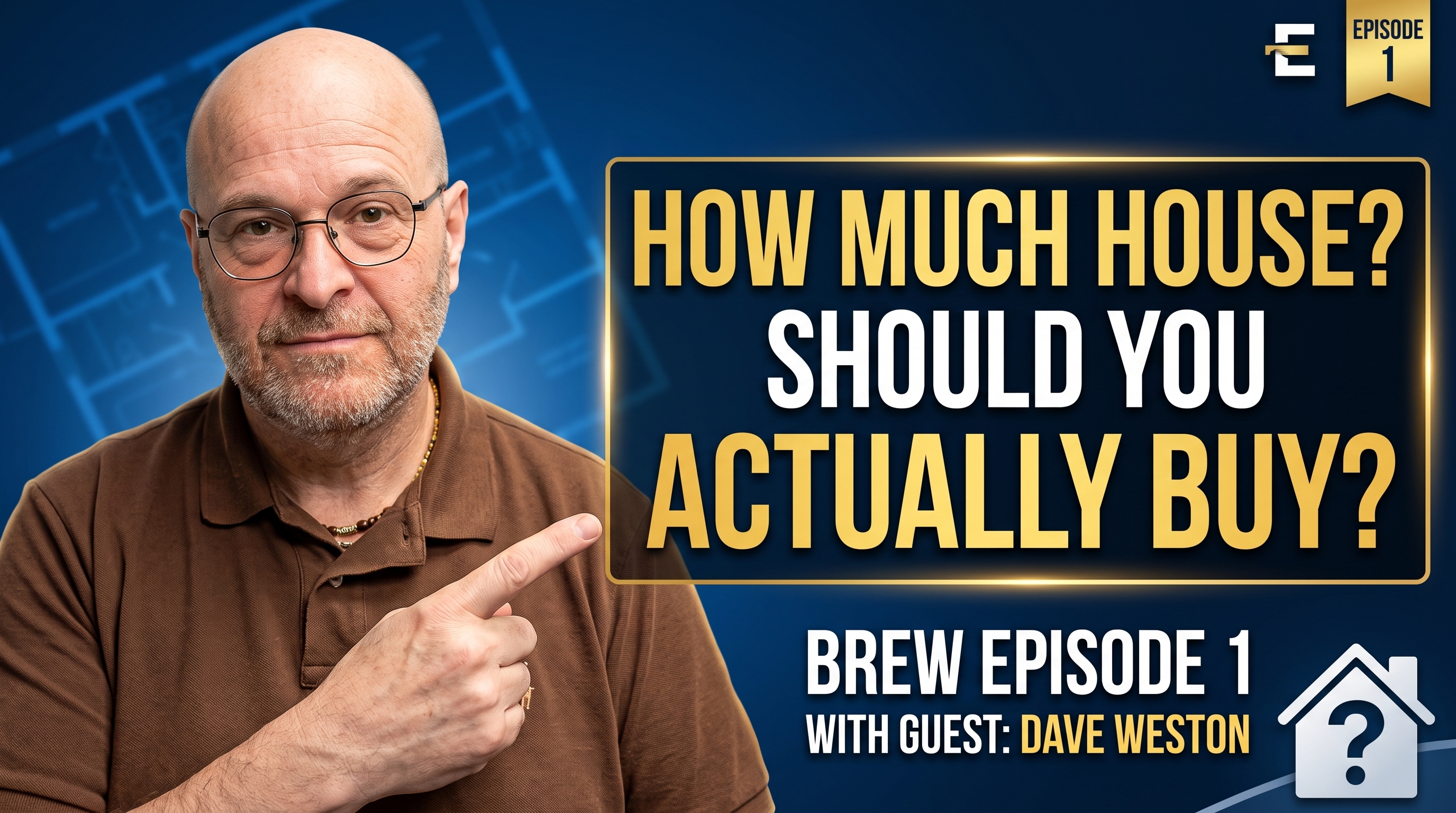
How Much House Can You Afford Is the Wrong Question and Here Is the Right One to Ask Instead
The Question Most Buyers Ask and the Better One They Should Be Asking
How much house can you afford? It is the first question almost every buyer asks and almost every lender answers. You share your income, your debts, your credit, and your assets. The numbers get run. And eventually someone tells you that you qualify for a four hundred thousand dollar home.
Dave Weston at the Dave Weston Group wants to change the question.
How much house should you buy? Because can and should are two completely different numbers and if nobody has ever explained the difference to you that is exactly what this episode of BREW, Building Real Estate Wealth, is designed to do.
Why a Mortgage Approval Is Not the Same as a Budget
A mortgage approval answers one specific question. Can this person reasonably repay this loan based on the information we have? That is an important question and it matters enormously. But it is not the same question as what happens to the rest of your life after you make this payment.
Can you still save? Can you still invest? Can you build an emergency fund? Can you replace a transmission when your car decides Tuesday morning is the perfect time to fail? Can you take your family on vacation? Can you sleep at night comfortably?
Nobody has ever called Dave and said the house is amazing but they cannot afford groceries anymore. That is not winning. A mortgage approval does not ask about your lifestyle. It does not ask whether you enjoy taking your kids to Disney or eating out twice a week or whether you have an expensive hobby. Those things are real and they belong in the conversation before the price range gets set.
The $1,000 Per Month Example Worth Sitting With
Imagine a household bringing in ten thousand dollars per month before taxes. After reviewing the full financial picture they qualify for a home with a four thousand dollar monthly payment. The lender says four thousand works.
But after looking at what this family actually wants their life to look like they decide three thousand is the payment that feels right. That leaves room for retirement contributions, an emergency fund, family experiences, and the financial breathing room to handle what life inevitably throws at people.
That is a one thousand dollar monthly difference. Twelve thousand dollars a year. Sixty thousand dollars over five years before considering any investment growth on the money that did not go into a larger mortgage payment.
Did they buy less house? Maybe. But they bought something that Dave argues is more valuable. Freedom. Freedom to save. Freedom to invest. Freedom to handle an emergency without reaching for a credit card. Freedom to say yes to the things that matter to their family. Freedom from wondering every month how it is all going to work.
Why Buyers Shop Backwards and How to Fix It
Here is where home buying typically goes wrong. A buyer asks what they qualify for. The lender gives them a number. The buyer goes shopping at that number. And once they see what that number buys them the number becomes the budget.
The psychology of this sequence is powerful and almost nobody talks about it. You see what four hundred thousand buys and you want it. The number that was supposed to be a ceiling becomes the target.
Dave compares it to walking into a car dealership and asking what is the absolute maximum amount they will finance and then buying exactly that. Most people would never shop for a car that way. Yet they sometimes do exactly that with the largest purchase they will ever make.
The fix is starting with the end in mind. Before asking what house you can buy ask what you want your life to look like after you buy it. That question leads somewhere better.
Three Things Every Buyer Should Think About Before a Price Range
Dave offers a framework that works whether you are buying next month or five years from now. Cash, life, future. Write those three words down.
Cash is about what remains after closing. One of the most common mistakes Dave sees is buyers who focus so intensely on the down payment that they arrive at closing with very little left. The down payment is not the finish line. It is the starting line. Furniture, moving costs, repairs, appliances, and the inevitable home improvement store runs are all coming. The question is not just how much to put down. It is how much cash should still be available after putting the money down.
Life is about what kind of existence you want the mortgage to support. Two families earning identical incomes can comfortably carry very different mortgage payments depending on what they value, what they spend money on, and what their priorities look like. The maximum approval should not automatically become the target payment. Your home is supposed to be part of your life. Your life should not become nothing but paying for your home.
Future is perhaps the most important of the three. Are you still contributing to retirement? Are you investing? Are you paying down other debt? Are you building reserves? Could you handle a job change? A medical event? A career shift? You are not just buying a home for who you are today. You are making a financial decision that will shape your options for years and the goal is to be better off financially because of the decision rather than in spite of it.
Why the Biggest House Is Not Always the Best Wealth-Building Move
Real estate builds wealth. That is true and Dave believes it genuinely. Appreciation, equity accumulation through principal paydown, and homeownership as a component of net worth are all real and valuable.
But your home should be part of your wealth-building plan. It should not be your entire wealth-building plan. If every available dollar goes into the house and nothing is left for savings, retirement, investments, or emergencies you may have a beautiful asset but you are financially fragile. Those are not the same thing.
A house that eats the entire financial picture is not a wealth-building tool. It is a wealth trap that happens to have good curb appeal.
The Homework Worth Doing Before Any Lender Conversation
Before the price range conversation take out a piece of paper and write at the top what you want your financial life to look like after you buy your home. Then answer these questions.
How much do you want left in savings after closing? How much do you want to invest every month? What other debts are you trying to eliminate? What experiences are important to your family? What monthly payment allows you to live comfortably rather than simply survive?
That exercise produces the beginning of a home buying plan. Then and only then does it make sense to start talking about price range. And instead of asking your lender for the maximum approval you can have a fundamentally different conversation. Help us build the mortgage around the life we want to support.
What the Dave Weston Group Is Actually Trying to Accomplish
The mission is not to originate mortgages. The mortgage is a tool. The house is an asset. The goal is what those things can help you build, protect, and eventually transfer.
Build wealth by making intelligent decisions when you buy and finance real estate. Protect what you are building by keeping reserves, managing debt thoughtfully, and preparing for what life throws at you. Transfer what you have built to the people and causes that matter to you.
Do not start with a mortgage. Start with the life you want your mortgage to support and build everything from there.
Next week Dave will tackle another major home buying assumption. Should you really put twenty percent down? He will make the case that in some situations putting twenty percent down could actually leave a buyer in a worse financial position than putting less down. The numbers and the framework for deciding what is right for your situation are coming.
Reach the Dave Weston Group at 573-587-3380 to have the conversation that starts with your life rather than your maximum approval.
Sources
ConsumerFinancialProtectionBureau.gov
NationalFoundationForCreditCounseling.org
Investopedia.com
MortgageNewsDaily.com
FannieMae.com

Mortgage Calculator
See your total mortgage payments using the tool below.
| Year | Interest | Principal | Balance |
|---|